The 9/11 Memorial & Museum, Explained
What the site is, the free memorial, the ticketed museum, what the six options actually sell, four common mix-ups, and how a first visit fits into a morning.
What the site is
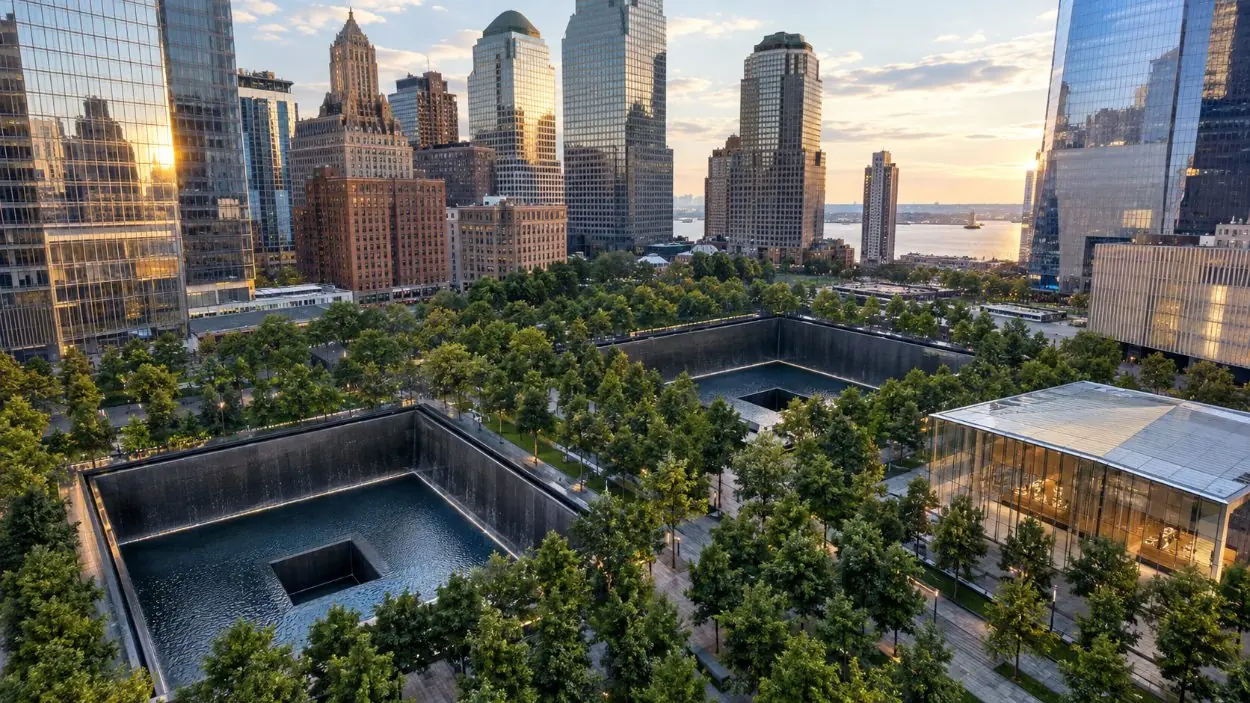
The National September 11 Memorial & Museum stands on the 16-acre World Trade Center site in Lower Manhattan, at 180 Greenwich Street. The memorial plaza takes up about half of the site and carries 2,983 names: the 2,977 people killed on 11 September 2001 in New York, at the Pentagon and on Flight 93, and the six killed in the bombing of 26 February 1993. The museum, opened on 21 May 2014, holds 110,000 square feet of exhibition space about 70 feet below the plaza, at the bedrock the towers stood on, and counted 23 million visitors in its first ten years.
The free memorial and its clock
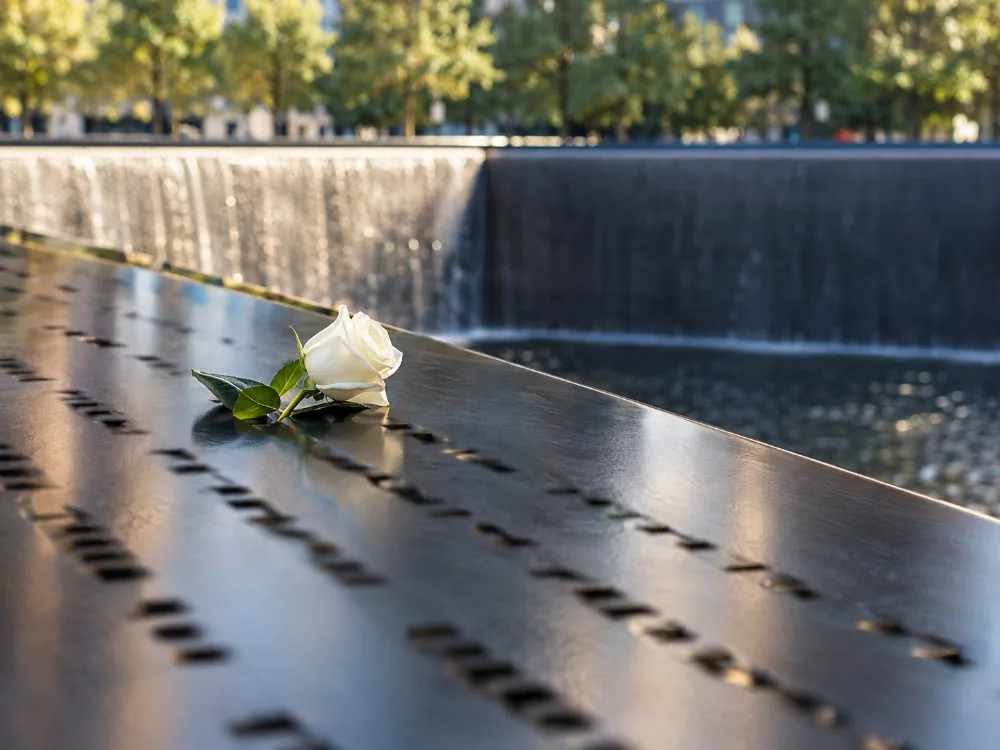
Everything at street level is free and needs no booking. The design, “Reflecting Absence” by Michael Arad with landscape architect Peter Walker, opened to the public on 12 September 2011. Two pools, each nearly an acre, sit in the footprints of the North and South Towers; water falls 30 feet into each and then another 20 feet into a central void. The names run around the bronze parapets in “meaningful adjacencies”, grouping colleagues, flight crews and first-responder units. About 400 swamp white oaks shade the plaza, the Survivor Tree stands among them, and the Memorial Glade, dedicated on 30 May 2019, honours the rescue and recovery workers who fell ill or died after the attacks. Hours, as published, are 8 am to 8 pm daily; check the memorial’s own page before travelling.
The ticketed museum below
The museum is entered through the glass pavilion at 180 Greenwich Street, where the two 80-foot steel tridents from the North Tower stand in the atrium. Entry is on a timed ticket, sold up to six months ahead and exchangeable or refundable up to 24 hours before; visitors are asked to arrive 15 minutes ahead of the slot, and entry is not guaranteed early or late. Hours, as published, are Wednesday to Monday 9 am to 7 pm plus many Tuesdays, with last admission an hour before closing; check the museum’s special-hours page before travelling. Every visitor passes airport-style security. One bag no larger than 8 by 17 by 19 inches is allowed; larger bags go to the mandatory coat check. There is no flash anywhere and no photography at all in the Historical Exhibition or In Memoriam, and the museum does not recommend those two galleries for children under 10. The full list is on visitor rules.
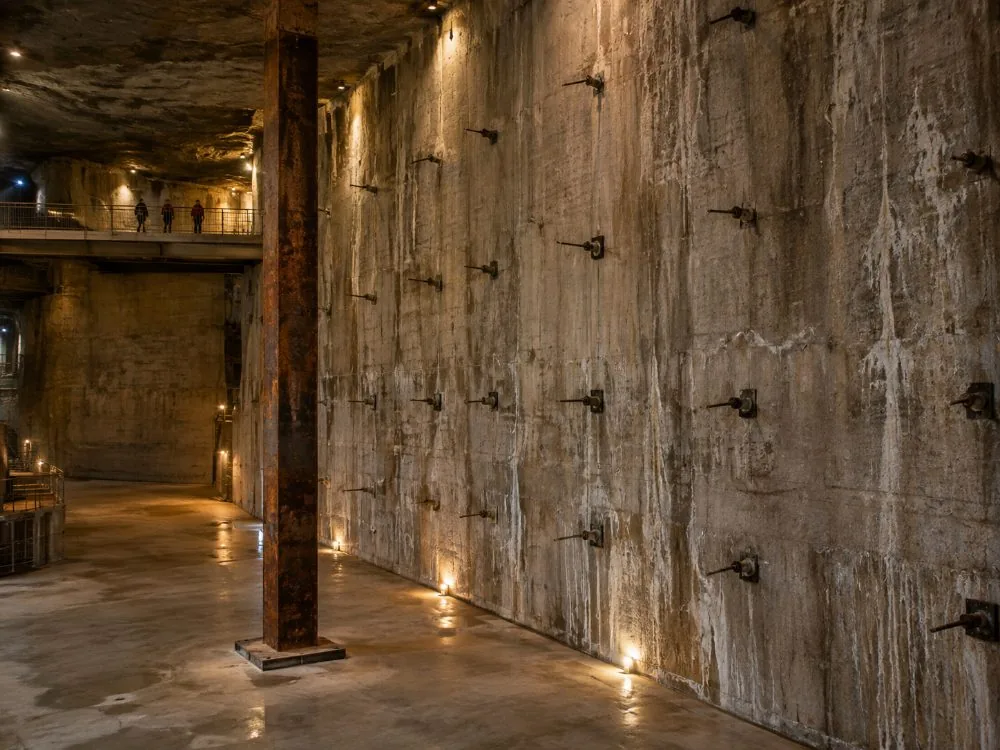
Below the pavilion a ramp descends to three permanent exhibitions: the Historical Exhibition, on the day and the years either side of it; In Memoriam, with portraits and belongings of the 2,983; and Foundation Hall, where the slurry wall that held back the Hudson stands beside the Last Column, removed from the site in May 2002. The museum says to plan at least 45 to 90 minutes; many visitors spend around two hours inside. Room by room on what is inside.
What the six options actually sell
Only one of the six products on GetYourGuide is a museum ticket: the museum’s own timed entry, with its early-access, guided-tour, flex and family options on the same listing. The other five are guided walks of 1.5 to 2.5 hours through the free outdoor layer: the Oculus, St. Paul’s Chapel, the FDNY Ten House, the pools and the Survivor Tree, led by a local guide. Four offer museum entry as an add-on; inside, the visit is self-guided unless the option with a museum docent is booked, because the walking-tour guide does not lead below ground. Three also offer One World Observatory, a separate timed ticket on floors 100 to 102, 1,268 feet up, with its own security. One walk offers the observatory but not the museum, one starts at City Hall, and one is a group of at most 20 people and the only one not suited to wheelchair users. All six are compared on the tickets page.
Four common mix-ups
The Tribute in Light is not on every night. It is lit once a year, from dusk on 11 September to dawn on 12 September: 88 searchlights on the roof of the Battery Parking Garage, visible up to 60 miles away and paused for 20 minutes at a time when migrating birds gather in the beams. The empty centre of each pool is design, not damage: the water drops into a void that cannot be seen into, the architect’s “absence made visible”. The unidentified remains are kept behind a wall at bedrock, between the two footprints, under the care of the New York City Office of Chief Medical Examiner; the repository is not an exhibit and is not visible to the public. And “Ground Zero”, the name the site acquired after the attacks, today means the free memorial plaza and the rebuilt World Trade Center, not the museum; the two are set out on memorial vs museum.
A first visit, in a morning
The plaza opens at 8 am, an hour before the museum, and is quietest early. PATH trains arrive inside the Oculus; by subway, the 1 to WTC Cortlandt and the E to World Trade Center are the closest. Half an hour at the pools, the names and the Survivor Tree fits before the first museum slot of the morning, and the museum then takes the rest of it. A guided walk booked for the afternoon covers St. Paul’s, the Ten House wall and the Oculus, and the observatory fits after it. Half-day and full-day versions are on one day at the site; transport on how to get there.
Ready to book
The museum’s own timed ticket, with its early-access and guided options, is below with live dates. The tickets page compares all six options, and which tour matches each kind of visit to one of them.
Frequently asked questions
Is the 9/11 Memorial free to visit?
Yes. The plaza with the two pools, the names, the Survivor Tree and the Memorial Glade is open daily from 8 am to 8 pm with no ticket. Only the museum below it is ticketed; see memorial vs museum.
Do 9/11 Museum tickets need to be booked in advance?
Yes. The museum sells timed-entry tickets, up to six months ahead, exchangeable or refundable up to 24 hours before the slot. Arrive 15 minutes early; details on do you need to book.
How long does a visit take?
The museum says to plan at least 45 to 90 minutes; visitors often take about two hours. A guided walk of the memorial lasts 1.5 to 2.5 hours. See how long it takes.